Toorop is considered the most important Dutch painter of Symbolism, with a life story that stretched from Java all the way to Domburg.
Born and died:Jan Toorop was born on 20 December 1858 in Poerworedjo, on Java, and died on 3 March 1928 in The Hague.
Education: at the age of nine he moved to the Netherlands and went on to study at the Rijksakademie in Amsterdam.
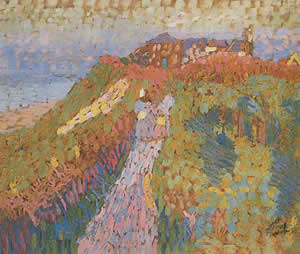
Stylistic development: his work evolved through an early Impressionism, in which he captured light through colour, and a subsequent Divisionism, towards his distinctive, ornate Symbolist style.
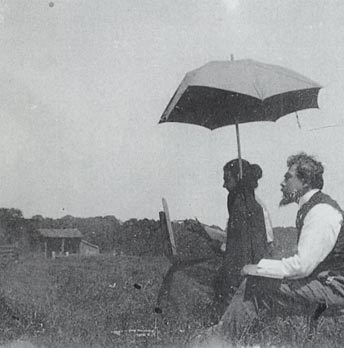
The heart of Domburg: from the start of the twentieth century, Toorop regularly stayed in Domburg, on Walcheren, where he formed the heart of a lively artists' colony.
The artists' colony of Domburg
As soon as Toorop settled in Domburg — which, thanks to the arrival of naturopath Dr Metzger, grew from 1897 into a fashionable spa town that even attracted European royalty — the village quickly drew a whole generation of artists in search of that same remarkable light over the Zeeland coast.
Fellow painters:Ferdinand Hart Nibbrig (1866-1915), Marinus Zwart (1882-1970) and Piet Mondriaan (1872-1944) made up his close circle of friends; there was no shared style to speak of, but all of them sought inspiration in the dune landscape, the woods and the distinctive people of Zeeland.
The Zeeland Light: the interplay of sun, seawater and salt crystals in the air creates a strikingly clear, ever-changing light above Domburg that drew artists like a magnet.
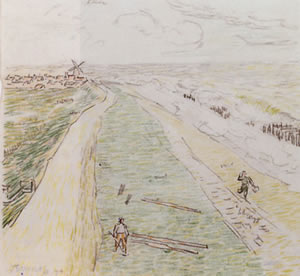
Piet Mondriaan: he first visited Toorop in 1904 and returned to Domburg almost every year until 1916; his sketches of the sea, a windmill and a church tower later formed the basis for his first abstract work.
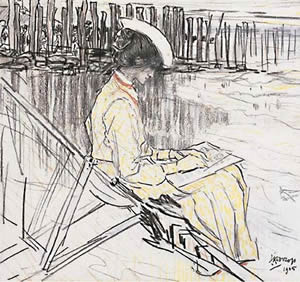
Jacoba van Heemskerck: this artist from The Hague regularly stayed in Domburg from 1905 onwards and became close friends with both Toorop and Mondriaan.
Marie Tak van Poortvliet: the wealthy art collector had a villa built in Domburg, financially supported the artists' colony and put artists in touch with buyers.
Toorop's Kotje
Toorop's Kotje was originally a small wooden pavilion in the dunes near Domburg, built on Toorop's own initiative to hold selling exhibitions for the town's visitors.
Year built: the pavilion went up around 1911-1912 to Toorop's own design, right by the dunes of Domburg.
A talked-about exhibition: fifteen painters together showed 82 paintings, watercolours and drawings there, including work by Toorop, Mondriaan and Jacoba van Heemskerck.
Short-lived: the wooden Kotje didn't survive a full year before being destroyed by a storm, and a sturdier successor didn't last much longer either.
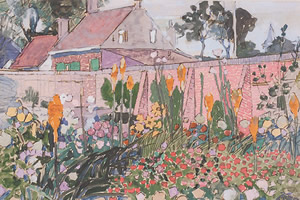
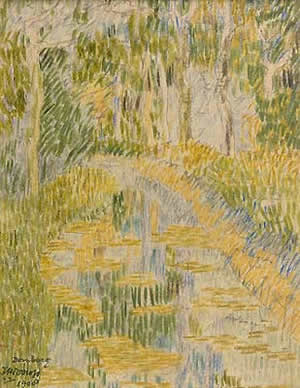
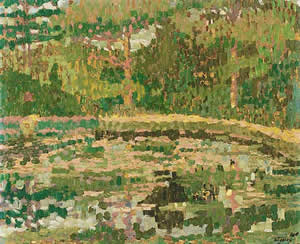
Etang a Domburg / Pond in a forest near Domburg - 1908
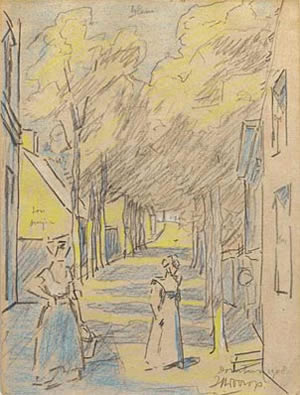
Village street, Domburg - 1908
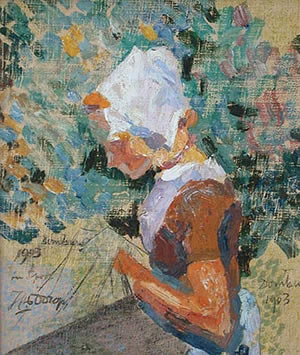
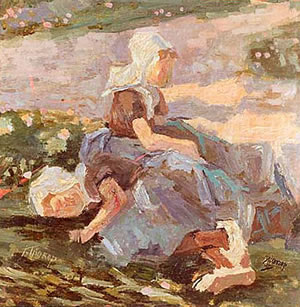
Zeeland girls at Domburg - 1909
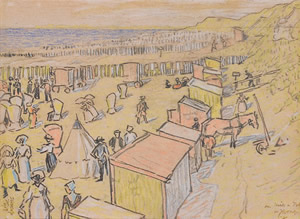
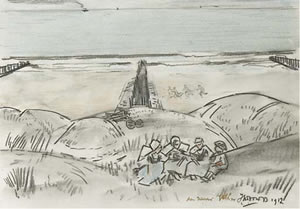
Domburg women in the dunes - 1912
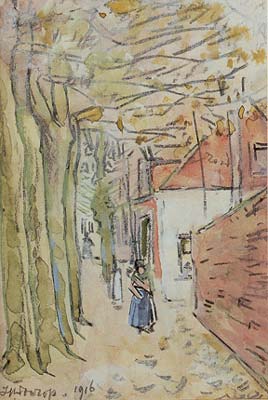
Een straat in Domburg / A street in Domburg - 1916
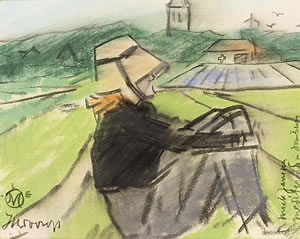
Miek Janssen meditating in Domburg - Undated
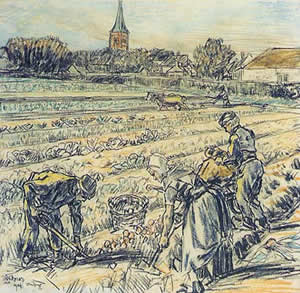
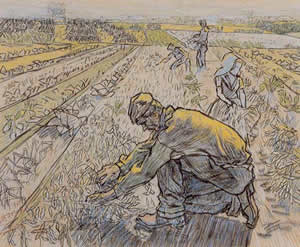
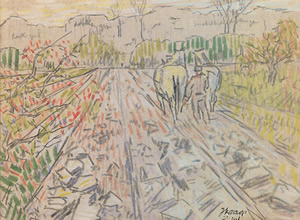
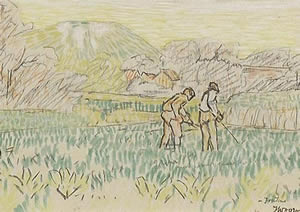
Farm labourers near the Hoge Hil at Domburg - Undated
Tracing Toorop in Domburg today
Anyone walking through Domburg today still passes places that Toorop and his contemporaries captured on canvas over a hundred years ago.
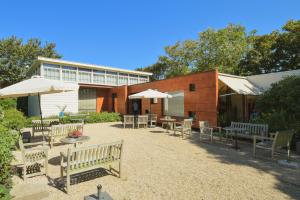
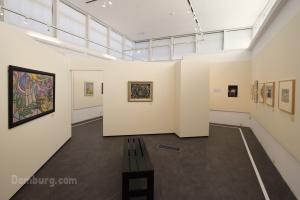
Marie Tak van Poortvliet Museum: see work by Toorop and other Domburg painters here, on the site that recalls the Kotje.
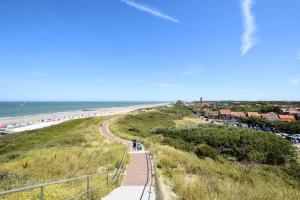
Beach and dunes: walk along Domburg's beach and through the dunes where Toorop found his inspiration for the ‘Zeeland Light’.
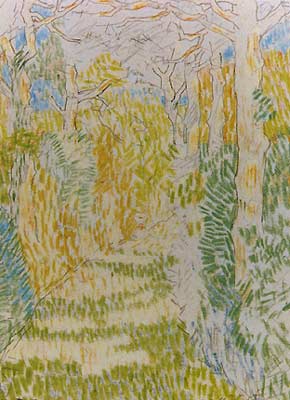
Village streets and the Boslaan: several of Toorop's canvases show lanes and the edge of the woods in Domburg that are still easy to recognise today.
Kunstmuseum Den Haag: part of Toorop's Domburg work, such as Duinen en zee bij Domburg from 1908, can be admired at the Kunstmuseum Den Haag.
Walking route through Toorop's Domburg
This short walk of about an hour links the places that Toorop and his friends captured on canvas.
Marie Tak van Poortvliet Museum: the starting point in the centre on the Ooststraat, with changing exhibitions on artists with a connection to Zeeland.
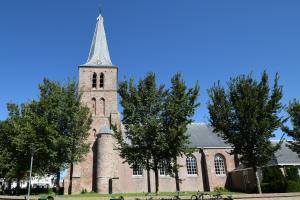
Protestant Church: the village church and the surrounding streets are the setting of paintings such as Village street, Domburg (1908) and A street in Domburg (1916).
Hoge Hil: from this dune top you look out over the beach and the sea, the landscape of Duinen en zee bij Domburg (1908) and Landarbeiders bij de Hoge Hil.
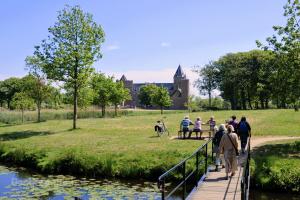
De Manteling: in this wood on the edge of the village you will recognise the lanes and ponds from Boslaan, Domburg and Stream in a forest, Domburg (1908).